How to Choose Sheets That Won’t Pill
Why cotton sheets pill, the three clues on the label that tell you before you buy, and how to stop sheets pilling at home. With a short video from Tara Kemble-Clarkson, founder of My Bedclothes.
By Tara Kemble-Clarkson
Published
Updated
In a shop, read the label: put back anything with polyester, don’t be swayed by a high thread count, and look for a pill test grade of 4 or 5 out of 5.
What Pilling Actually Is
A cotton thread is lots of tiny fibres twisted together, like a plait. When the fibres are short, their ends poke out of the yarn. Every night you rub against them, and the loose ends tangle into small balls on the surface. That is pilling, sometimes called bobbling.
It usually shows where you move most: under your shoulders, hips and feet.
Why One Cotton Sheet Pills and Another Doesn’t
Two sheets can both say 100% cotton and wear completely differently. The difference is how they are made.
Long fibres. Good makers comb out the short fibres before spinning, so there are fewer ends to work loose.
A tight twist. Twisting the yarn firmly holds the fibres in.
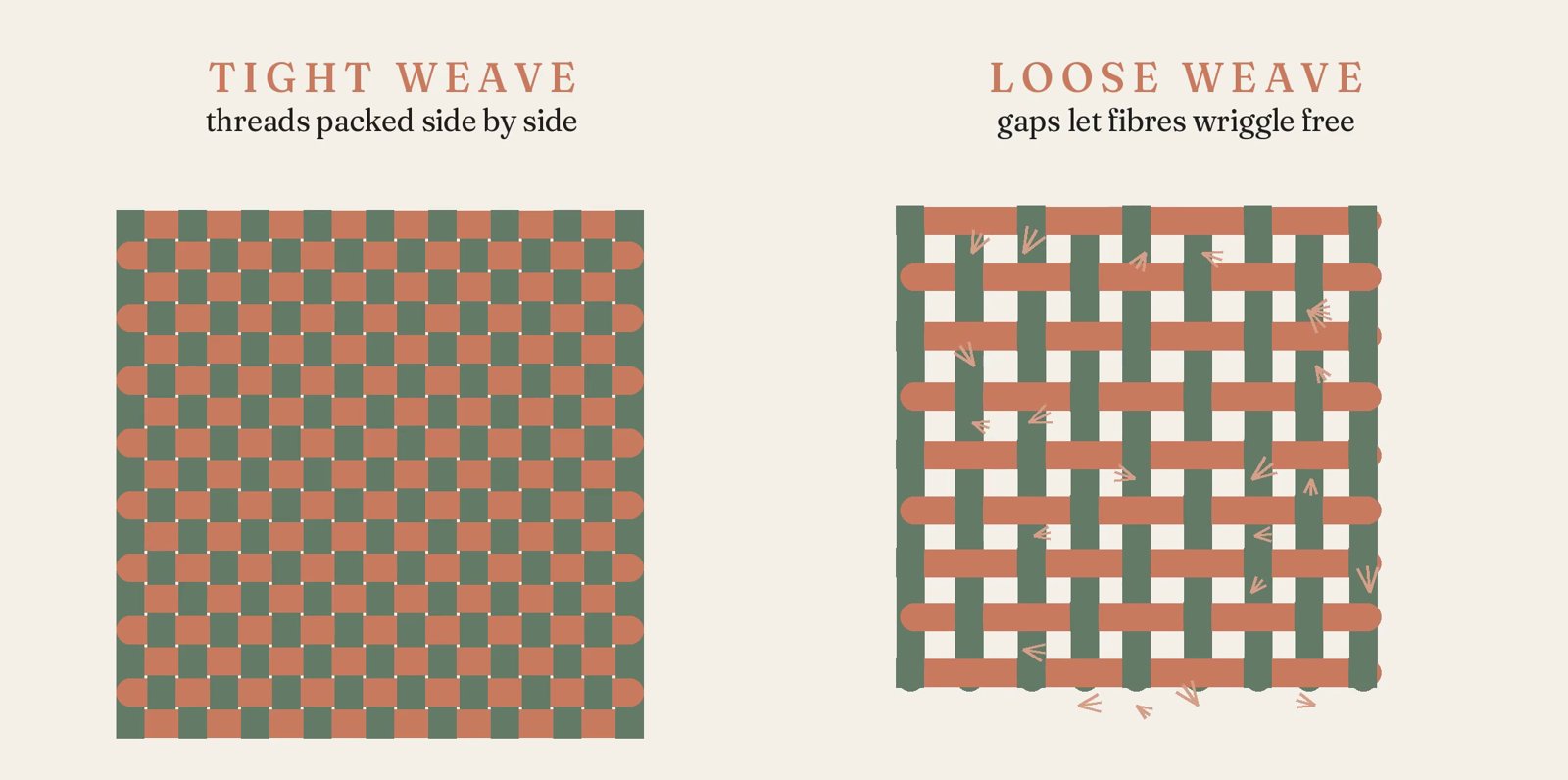
A close weave. Threads packed side by side, like people squeezed onto a bench, leave nothing room to wriggle free. A loose weave is a bench with gaps: the threads move about and the fibres escape.
Three Clues on the Label
You can’t see pilling in a shop. It shows up after weeks of sleeping and washing. But you can read the clues before you buy.
1. Polyester or polycotton? Put it back. Synthetic fibres are strong, so the bobbles cling on instead of washing away.
2. Ignore a high thread count. A thousand threads doesn’t mean a better sheet. The number tells you nothing about how long the fibres are. Our five things to look for when choosing bedclothes explains what matters more.
3. Ask for the pill test grade. Good makers rub the fabric in a lab thousands of times and grade it from 1 to 5. 4 or 5 out of 5 is what you’re looking for. If the grade isn’t on the label, ask the shop or the maker.
The pill test grade
In the lab, fabric is rubbed thousands of times, then graded from 1 to 5.
- 1
Severe pilling
- 2
Distinct pilling
- 3
Moderate pilling
- What to look for4
Slight pilling
- 5
No pilling
How to Stop Pilling at Home
Wash sheets on their own. Towels, jeans and zips rub against the surface like sandpaper.
Give them room. Don’t fill the machine to the top.
Hang them to dry, and skip the hot dryer if you can.
For washing temperatures and how often, see how often to change your bed sheets.
Our Bedclothes
We make three fabrics, each for a different kind of sleeper: Fresh Cotton, a crisp, cool percale; Classic Organic Cotton, a smooth sateen that is GOTS certified organic; and Cottage Cotton, soft from the first night. All are made in Guimarães, northern Portugal.
Great Sheets That Do Good
Every order helps us make bedding for children who need it, through our giving partners Sleep Patrol and Zarach. Every child deserves a bed that feels like home.
For the Horizontal Life.
Read the video
Show the full transcript
Two sheets. Both 100% cotton. This one pilled, and this one didn’t. So what’s the difference?
Cotton thread is lots of tiny fibres twisted together, like a plait. If the fibres are short, the little ends poke out. Rub against them every night and those tiny ends tangle together into a tiny ball. That’s pilling.
So what it comes down to is how the sheet is made. First, the maker combs out the short fibres, so there are fewer ends to poke out. Then they twist the yarn tightly, so the fibres stay held in. Then they weave the threads close together, like people squeezed side by side on a bench, so nothing can wriggle free. A loose weave is a bench with gaps. The threads move about, the fibres escape, and you get pilling.
Now, you can’t see pilling in a shop, but you can look for clues. Turn the packet over. If it says polyester or polycotton, put it back. Ignore the giant thread count. A thousand threads doesn’t mean better. And lastly, look for the bobble test. Good makers rub the fabric in a lab thousands of times and grade it from one to five. Ask for the grade. Four or five is what you’re looking for.
Now, at home, wash your sheets on their own. Towels, jeans and zips are like sandpaper. Give them room, don’t stuff the machine full, and skip the hot dryer if you can. Hang them to dry.
FAQ
Why do cotton sheets pill?
Short cotton fibres work loose from the yarn and tangle into tiny balls as you move against the sheet. Sheets made from long fibres, with a tight twist and a close weave, pill far less.
How can you tell if sheets will pill before you buy?
Read the label. Avoid polyester and polycotton, don’t rely on a high thread count, and look for a pill test grade of 4 or 5 out of 5.
What is a pill test grade?
A lab test that rubs the fabric thousands of times, then grades it from 1 to 5. Grade 5 shows no pilling; 4 or 5 is what to look for in sheets.
Does a high thread count stop pilling?
No. Thread count is the number of threads in a square inch. It tells you nothing about fibre length, which matters more for pilling.
How do you stop sheets pilling?
Wash them on their own, away from towels, jeans and zips, don’t overfill the machine, and hang them to dry rather than using a hot dryer.
Can you remove pills from sheets?
A fabric shaver used gently will lift them off. Change how you wash, or they will come back.