Five Things to Look for When Choosing Bedclothes
How to choose bedclothes you’ll love: consider how you sleep, the fabric feel, the fibre, the fitted sheet, and the small details that simplify making the bed.
5 minute read
By Tara Kemble-Clarkson
Published
Updated
In this guide (9 sections)
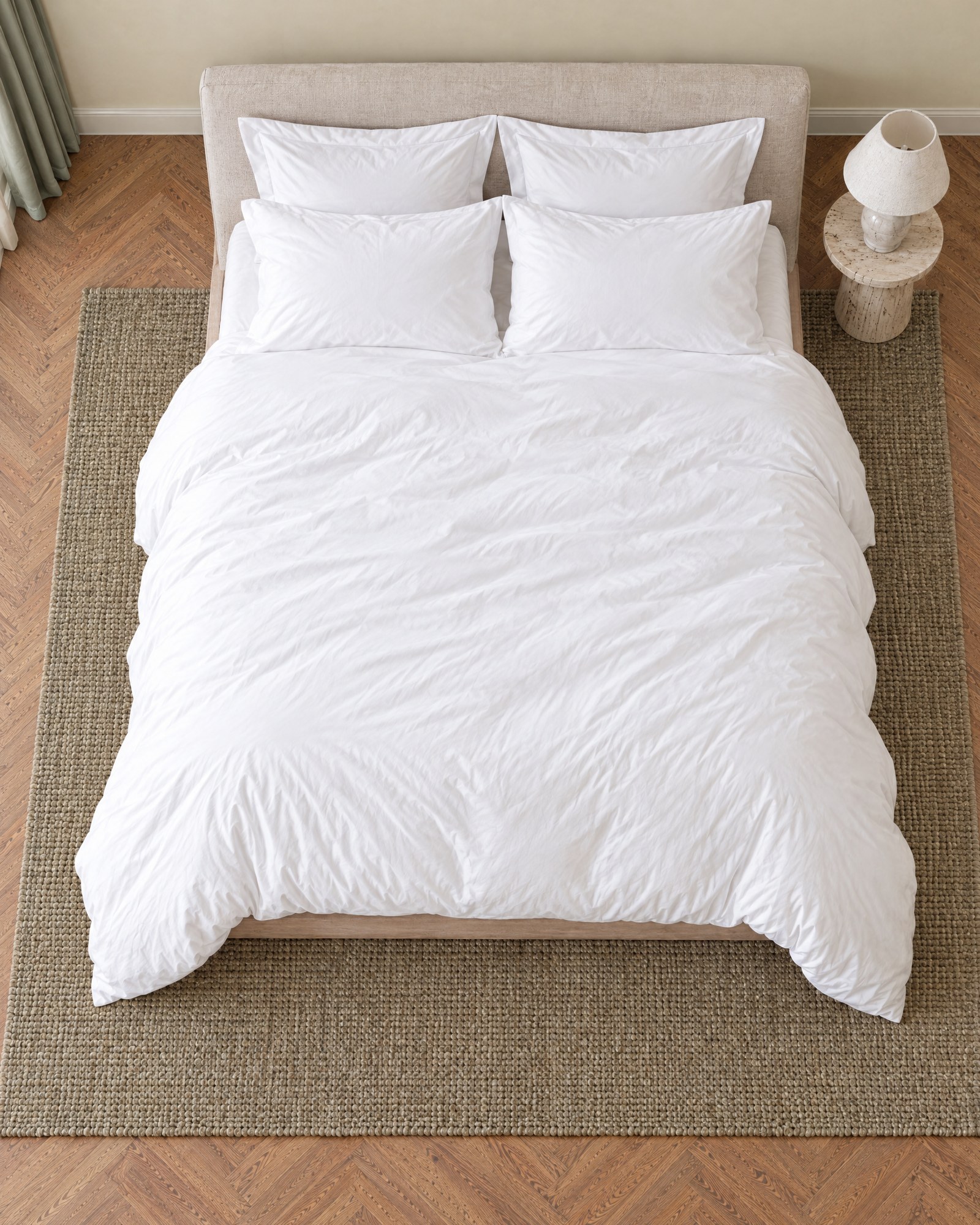
Most bedclothes are bought online. They look great in photos, but only after a few nights do you know if you truly enjoy them.
I’ve thought a lot about what matters, and it boils down to five key points. Check these before you buy to increase your chances of getting it right the first time.
How You Sleep
Start with yourself, not the sheets. Are you a warm or cool sleeper? This question greatly influences what you should choose.
If you sleep warm, look for breathable cotton. The weave matters: percale feels crisp and cool, while sateen is cool, smooth and soft. Our Fresh Cotton is percale, cool year-round, and our Classic Organic Cotton is sateen, soft and smooth for all seasons.
If you often feel chilly at night or you want softness from day one that still breathes, our Soft Cotton Cashmere is soft and warm without being heavy. It combines cotton with cashmere for a light, airy feel. It’s much lighter and more breathable than brushed cotton.
Also, consider your room. A cold bedroom can change what works for you, even if you normally sleep warm.
The Feel You Like
Every fabric has a unique texture. It helps to know what you prefer before you decide.
Think about your favourite clothes. If you love the crisp feel of a cotton shirt, you might prefer percale, like our Fresh Cotton. If you enjoy a softer touch, sateen might be better, like our Classic Organic Cotton. And if you live in comfy T-shirts, cotton cashmere could be your go-to.
There’s no right answer, just what feels best for you.
The Fibre, Not Just the Thread Count
Thread count indicates how many threads are woven into a square inch of fabric. While helpful, it’s only part of the story. A higher number doesn’t always mean better quality.
The fibre quality, weave, and finishing all affect how the fabric feels and performs.
Focus on the fibre and weave, not just the label’s number. Look for meaningful certifications, too.
These certifications provide different insights, so know what each covers.
The Depth of the Fitted Sheet
This is often overlooked, but very important.
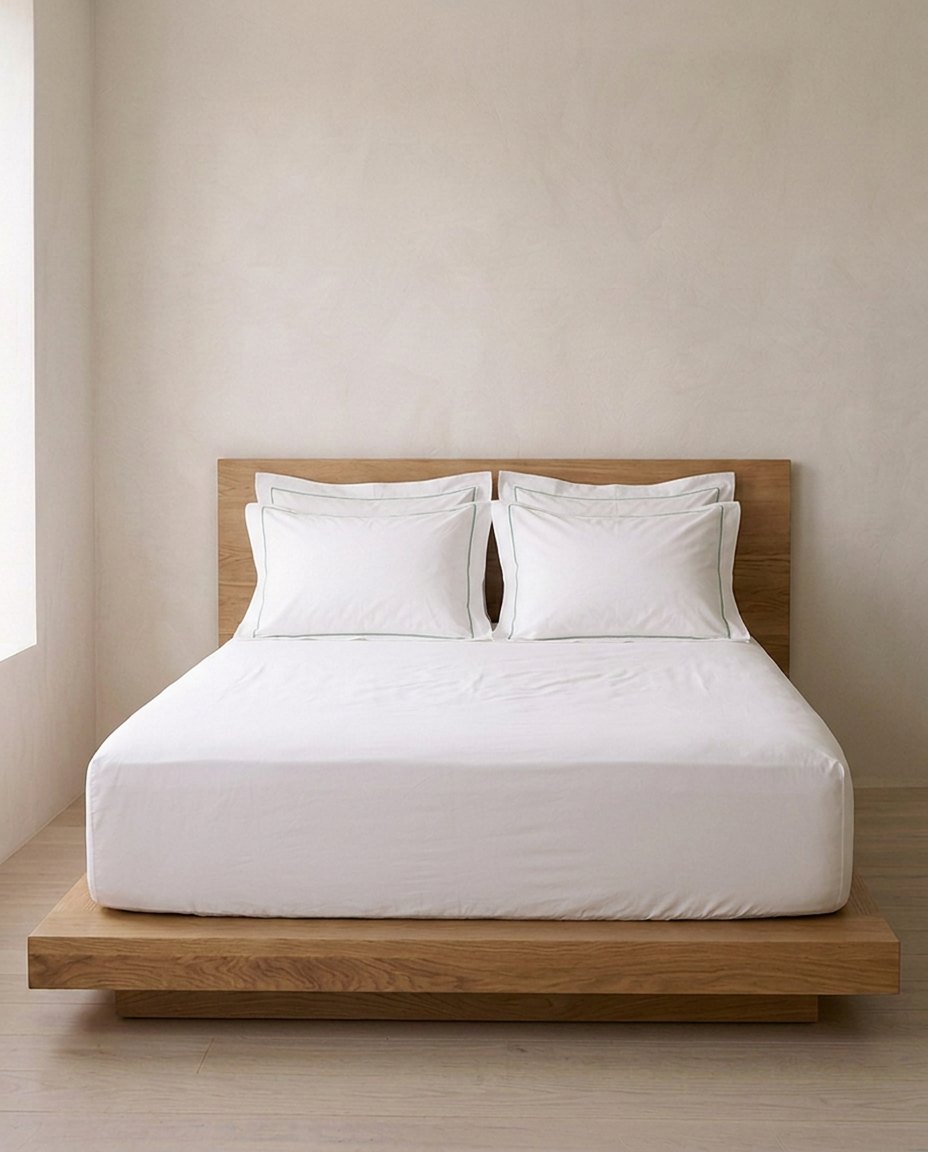
Mattresses are getting deeper, and many of us add a topper or protector. A fitted sheet with a shallow pocket may seem fine initially but can slip off easily, making a bed look untidy.
Before buying, measure your mattress’s depth with any topper or protector. Choose a fitted sheet with enough depth to cover it comfortably.
Our fitted sheets have a 40cm pocket and elastic all around, keeping them in place night after night.
The Details That Make a Bed Easier to Make
Lastly, look for features that help when changing the bed.
I’ve learned from professionals who make beds daily in rentals and hotels. They know which details save time and which complicate things.
Our Classic Organic Cotton and Soft Cotton Cashmere in Cloud have three helpful features. These details may not be noticeable when the bed is made, but they make changing it easier.
Before You Buy: Five Things to Check
If you need help choosing, feel free to reach out. I’m always happy to discuss sheets.
Tara
Our Bedclothes
We make three fabrics, each for a different kind of sleeper: Fresh Cotton, a crisp, cool percale; Classic Organic Cotton, a smooth sateen that is GOTS certified organic; and Soft Cotton Cashmere, soft from the first night. All are made in Guimarães, northern Portugal, and every fitted sheet has a 40cm pocket with elastic all the way round.
Great Sheets That Do Good
Every order helps us make bedding for children who need it, through our giving partners Sleep Patrol and Zarach. Every child deserves a bed that feels like home.
For the Horizontal Life.
FAQ
How do I choose bedclothes if I sleep warm?
Look for breathable cotton. Percale, like our Fresh Cotton, feels crisp and cool; sateen, like our Classic Organic Cotton, is cool, smooth and soft.
Does thread count matter?
It is only part of the story. The fibre quality, weave and finishing affect how a fabric feels and performs more than the number on the label.
How deep should a fitted sheet pocket be?
Deep enough to cover your mattress with any topper or protector and tuck underneath. Our fitted sheets have a 40cm pocket with elastic all around.
What is the difference between GOTS and OEKO-TEX® STANDARD 100?
GOTS, the Global Organic Textile Standard, proves cotton is certified organic and checks every step from field to finished fabric. OEKO-TEX® STANDARD 100 means every part of the product has been tested in a laboratory for harmful substances.